By Rianne Hill Soriano
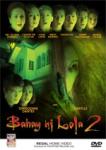 Conceivably, Regal Films revived Bahay ni Lola with the attempt to break in to that horror genre trend following the footsteps of a number of local and other Asian horror flicks. Was it worth the chills and terror the audience expected especially to those horror freaks and seekers of that ultimate “scare shout?”
 The film was not actually scary. In fact, the comic side was more appealing as those rendered by John Lapus (the interior designer), Chokoleit (the family’s maid/yaya), and believe it or not, the “lolas” and the rest of the “ghosts” seen in the film. Strangely, the typical horror elements were there (the white-painted scary faces and uncombed hair, some black shades and shadows, a dose of some scary music, shots of blood and insects to add to the gore, close-up and canted shots and lighting design for that scare effect, etc.). However, nothing much of the “gulat factor” to keep that blood rush to the movie spectator.
Overall, the cinematography was not an artsy fartsy endeavor but rather a complementing treatment for the story requirements. No much fuss with the exposures, camera angles, focusing, and the rest of the camera work. The director of photography (a. k. a. the cinematographer) Romy Vitug gave a major contribution to create a generally good visuals for the movie. He knows his craft well as seen with the littlest details as keeping good lighting and exposure for the film (like that shot where there was a reflection of a building outside from the door of Dingdong’s office). He utilized tight shots for most of the scenes to provide more details to those facial expressions. Tracking shots were also very apparent. The smoke machine was quite not effective though. Personally, it added to that “faky feel” which made the movie a “non-scare” horror film. Though the visuals were complementing the story, no much chills and shouting at the theater were heard. The comic side of it upstaged its horror side so much.
The production design shows Regal Film’s overtones of that “Mano Po” look and Chinese appeal through Gloria Romero’s Chinese shop and that feng shui concept. The doll that was used for a “semi-Chucky” role was quite okay. The sort of plague of flies and ants could have been more effective and scary if deemed with the right treatment and execution. Again, though the horror elements were seen in the production design, the horror side of it was still, quite unsuccessful. And like the cinematography, the music tried to complement the story and visual requirements. However, the music and sound design were not tough enough to uplift this supposedly horror film and create that fright. They were too subtle; it lacked that “bitaw” for scare and suspense. But they weren’t merely the ones to blame, because just like what I said, they would have to yield to the overall treatment given to the film.
I was quite neutral with the acting of most of the major and supporting characters. Dingdong Dantes was not that consistent at times but he was considerably fitting for such role. One thing that I would seek more for his acting was “that feel of mystery and fear” which could have made the movie more effective. The “ghost lolas’” looks were nothing new, and in fact, overused. Remind us of “The Ring” and “The Grudge” to name a few... I actually have nothing against such, but sadly, I found no much creativity to create an effective scare of a film trying to blend with that Asian horror trend. Moreover, the comedy even backed itself up at the end of the story upon seeing the “ghost lola” attached to the door of the truck. Scary? Actually, it was more of funny.
Though there were certain parts of the script that were considerably okay for a mainstream movie, the storyline itself was nothing new to begin with. The last part of the movie seemed to lack some twist. No much fast heartbeats from the audience. It was way too predictable. And what happened to the girl sacrifice? The story ended with Karylle and Dingdong leaving the haunted house but there was no sign of sadness for the death of the girl who traded herself for Dingdong’s life. But it turned out that the girl was confirmed to have exchanged her soul to the ghosts for the family’s freedom from the curse of the house. This made me question the completeness of the ending. Of course, the idea of Bahay ni Lola Part 3 (which could probably give a clearer view of this later on) seemed to be lingering around… But then again, this Part 2 should stand on its own. The attempt to scare didn’t work.
It was kinda contrived which made things so much predictable. I believe the script, style and treatment lacked both the simplicity and complexity for the execution. Further effort could have tracked it a bit more forward. What surfaced more was the comic relief. I believe it’s not merely with the effects nor any technological advancements to make it effective but it’s with the vision and execution. It’s not merely with the pretentions but with the sincerity and creativity. It doesn’t exactly have to be original, for as long as it could stand in its own ground. Compare this with the horror success of the 80’s Shake, Rattle and Roll. This may not be a big-budgeted horror film, just like with Bahay ni Lola 2. But the “goosebumps” intended for it was there for the screaming spectator.
Overall, with the effective comedy but poor scare factor for a B-movie horror film, I would have to rate the new Bahay ni Lola with 2.5 out of 5.


 Posts
Posts


No comments:
Post a Comment